



How to Build an Effective Dry Routine for Freedivers: Part I

Plant the seeds of dry discipline today, so you can harvest progression in your freediving tomorrow.
By Gonzalo Cortes
Editor Deena Lynch
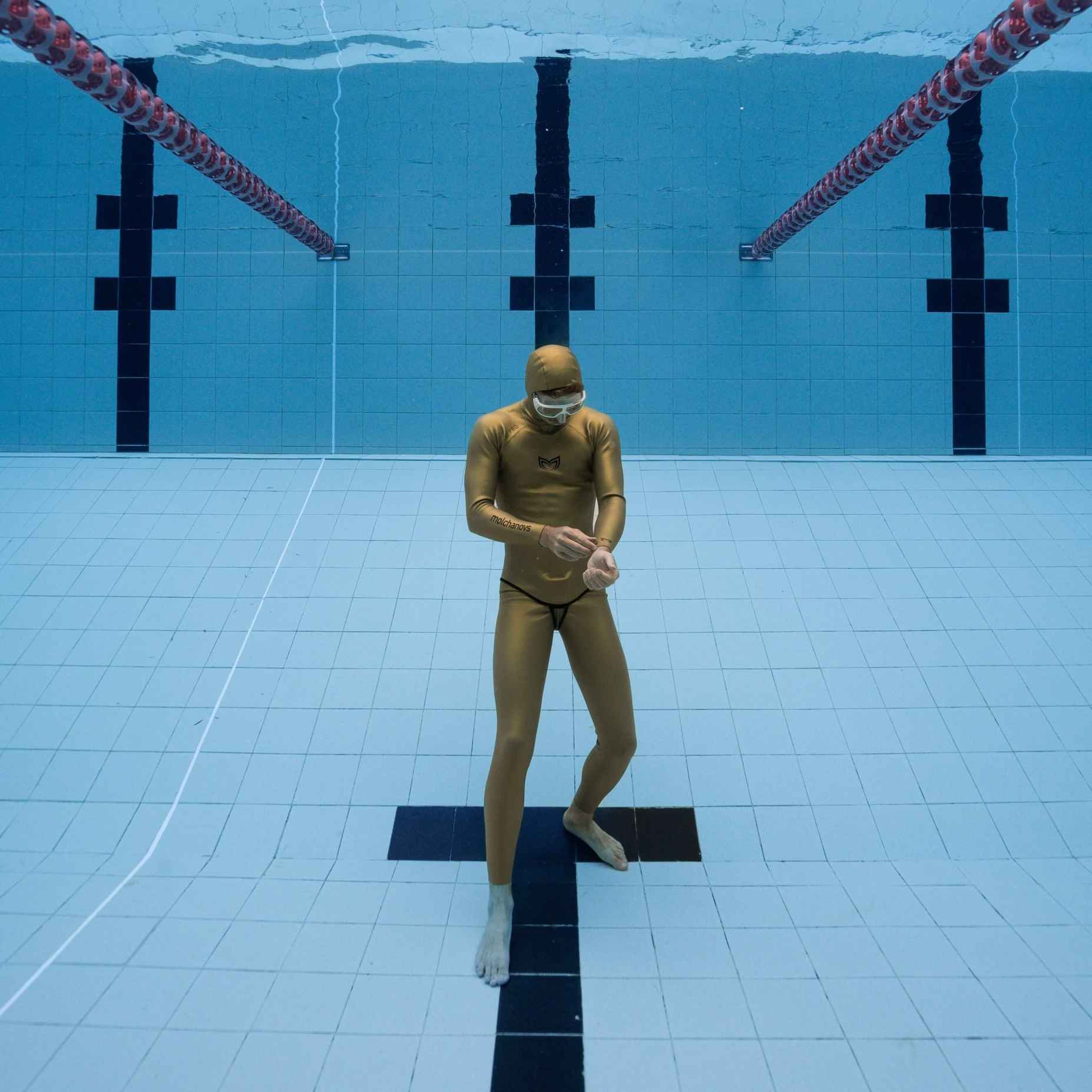
Molchanovs athlete Gonzalo Cortes walks us through how discipline above the surface supports performance below it. © Photo credit @theeditsuite
It is no secret that whether you’re a professional athlete or a recreational freediver, dry training is important, and how much improvement you can get from your well-structured routine.
Where most freedivers get stuck isn’t whether or not to train dry (on land, outside of water), but how to build the routine and where to focus. So let’s break down how to create a solid dry training routine that you can seamlessly integrate into your overall training program.
Trainable Aspects in Freediving
Goals should always be measurable and realistic. But before setting numbers, ask yourself: what aspect of your freediving do you actually want to develop?
You can choose more than one and just remember:
Not everything in freediving is a breath hold.
And not every breath hold needs to be maximum effort.
You can develop specific strength in the gym, train body awareness to improve your mouthfill skills, use visualization for mindset and dive strategy, work on mobility for better streamline and technique, and, of course, improve your breath hold. You can build hypercapnic and hypoxic tolerance, and even increase your failure depth with diaphragmatic stretching; but make sure to complete the right level of certification such as the Wave 3 freediving course or be under the guidance of a Molchanovs freediving instructor before trying this.
When it comes to dry training, you can work on:
-
Specific strength and conditioning
-
Body awareness for mouthfill
-
Visualization and dive strategy
-
Mobility for streamline and technique
-
Increased lung capacity for comfort
-
Hypercapnic (CO₂) tolerance
-
Hypoxic (O₂) tolerance
-
Diaphragmatic flexibility and failure depth (Wave 3 and above)
Remember, much of Frenzel equalization and mouthfill training must be done dry on land to isolate the movements and gain control and awareness. If equalization is your focus, grab your EQ Trainer tool and get the party started.
Once you know what matters most, or what you want to work on next week, decide how much time to dedicate to each area. Ask yourself:
Is dry training your core, or is it an accessory?
Keep it simple:
-
If you’re diving in the pool or at depth two or more times per week, those sessions are your core on that day.
-
Everything else is secondary and supports them.

Organising your week
Plan your week in advance. This keeps you consistent, helps you hit every session, and prevents overtraining. Consistency and discipline will always beat short-term intensity.
If You’re Training in the Water
Your water sessions are your core. They already cover:
-
Hypercapnic and hypoxic tolerance
-
Technique
-
Awareness
-
Mental training
Dry work should support them.
-
Add one dry static in the morning on a non-diving day to help your mammalian dive reflex (MDR) activate more efficiently.
-
Schedule strength sessions on the same days after your dives when possible.
-
If you dive at night, train strength the following morning.
-
Avoid heavy gym work before dives.
-
Prioritize longer rest before max attempts.
If You’re Not Yet Training in the Water
Dry training becomes your core.
Start with 3–4 core sessions per week, such as:
-
CO₂ tables
-
O₂ tables
-
Walking tables
-
Apnea squats
If you’re new to freediving, prioritize CO₂ tables. That’s where your breath-hold really starts to grow.
(We’ll show you how to structure everything altogether in Part 2, which you can find here)
Visualization and meditation
These are often discussed and often avoided, especially at the beginning, but they are incredibly powerful tools.
If you’re aiming for a specific dive, visualize it as many times as possible. Feel the sensations, embrace the comfortable moments and accept the challenging ones.
Even better, record your voice guiding yourself through the dive and play it back. Athletes have been using this technique for years, and for many, it has helped break through the infamous 50-meter wall where people can get stuck.
Meditation works the same way by building awareness. It’s a game-changer when tension sneaks into your dive.
How many times have we said, “I’m relaxed, but I don’t know why my soft palate shuts.”
Most of the time, it’s subtle tension. Muscles we don’t even realize we’re activating. That tension triggers the sympathetic nervous system.
Meditation will help you recognize it and release it, helping you to stay calm and efficient both in the pool and at depth.
Pro Tip: Remember the “Attention Deconcentration” technique? Use this session to practice it and get really good at it!
Start small:
-
10–15 minutes
-
2–3 times per week
It’s gentle on your nervous system, aids recovery, and boosts performance. From there, you can expand as much as you want.
Equalization exercises
It’s just you, your EQ Trainer 2 tool, your balloon, and the mirror. If you want to develop and excel in your equalization skills, you need time in front of that mirror.
Whether you use:
-
Frenzel
-
Deep Frenzel
-
Mouthfill
-
Reverse packing
-
N-charge
-
M-charge
You’ll progress much faster practicing dry first then applying it underwater instead of struggling on breath-hold.
You can train:
-
Soft palate control
-
Glottis control
-
Cheek strength
-
Larynx amplitude
-
Eustachian tube elasticity
-
Specific sticking points
Start small:
-
10–15 minutes per EQ session,
-
2–3 times a week, maybe the night before a dive.
You can expand from there, even twice daily. It’s not overly demanding (unless done on empty lungs), so you can practice anytime. If you don’t have an EQ Trainer 2 tool yet, purchase one through the Molchanovs store to improve your equalization.

Mobility and Stretching Routine
Mobility and flexibility are often overlooked, but are key to efficient movement and perfect form underwater. A focused mobility routine will help you achieve a better streamlined position, improve your technique, and prevent injuries.
Start with shoulder mobility to achieve the “arrow” position in your streamline. Controlled rotations, scapula activation, and chest-opening stretches reduce drag and let you glide farther with less effort. Then work on hip mobility for a strong no-fins kick. Don’t forget hamstrings and hip flexors. Tight muscles here limit streamlining, so use seated forward bends, lunging stretches, and dynamic leg swings to maximize glide.
Pro Tip: Activate and stretch your ankles. Pointed toes reduce drag and increase efficiency.
Aim for:
-
2 mobility sessions per week
-
Ideally after strength training (when warm)
-
Or before big dives
The nervous system load is low, but the benefits are huge.
 All smiles before another pool session because good training days usually start this way. © Photo credit @theeditsuite.
There you have some exercises to start including in your training routine. Keep your training consistent, and progress will show up. Follow through to Part II of How to Build an Effective Dry Routine for Freedivers where we discuss routines for lung capacity, conditioning and how to put it all together.
Want more freediving pro tips from elite athletes straight into your inbox? Subscribe to the Magazine for access to the latest articles, advice, stories, gear, news and competition reporting.
Thank you so much! Very structured training frame and details from all the relevant angles. I think I’ll print it as my guide. I believe I wasn’t sure what to focus on and would rather overdo some types of training neglecting the others and then drop it all together.
Leave a comment