

Why Freedivers Are Turning to Beetroot Powder

The natural way to improve oxygen efficiency and relaxation underwater
By Tara Kate Rawson
Editor Deena Lynch
From soil to sea, beetroots are a freediver’s natural ally.
As a sports dietitian and freediving athlete, I use beetroot powder before every deep dive to help conserve oxygen, remain calm, and move efficiently underwater. Freedivers are always seeking ways to make every breath count. Beetroot powder is gaining attention for its nitrate content, which can enhance blood flow, reduce oxygen consumption, and improve energy efficiency. Understanding how it works and how to use it can provide practical benefits for freediving performance.
How Beetroot Works
Beetroot is naturally rich in inorganic nitrate (NO₃⁻). After ingestion, oral bacteria convert nitrate to nitrite (NO₂⁻), which is then converted to nitric oxide (NO) in the body. Nitric oxide relaxes blood vessels, improves circulation, and enhances mitochondrial efficiency, leading to energy production.1
For freedivers, these effects are crucial. Improved oxygen delivery and muscle efficiency help preserve oxygen for the brain, diaphragm, and heart. Studies in athletes have shown that dietary nitrate can reduce the oxygen cost of submaximal exercise by 3–5% and extend time before reaching exhaustion by 15–25%.2,3 Although most research focuses on running and cycling, the underlying physiology directly applies to freediving: using less oxygen for the same work allows for longer dives.
Nitric oxide supports several key adaptations:
- Vasodilation and blood redistribution: Enhances flow to priority organs while peripheral vasoconstriction occurs.4
-
Oxygen conservation: Improves microcirculation and mitochondrial efficiency.2
Muscle efficiency and reduced fatigue: Promotes lactate clearance and delays muscle heaviness.5 - Lower blood pressure and relaxation: Reduces cardiac workload and supports calm pre-dive states.6
- Improved recovery: Facilitates nutrient delivery and waste removal after diving.
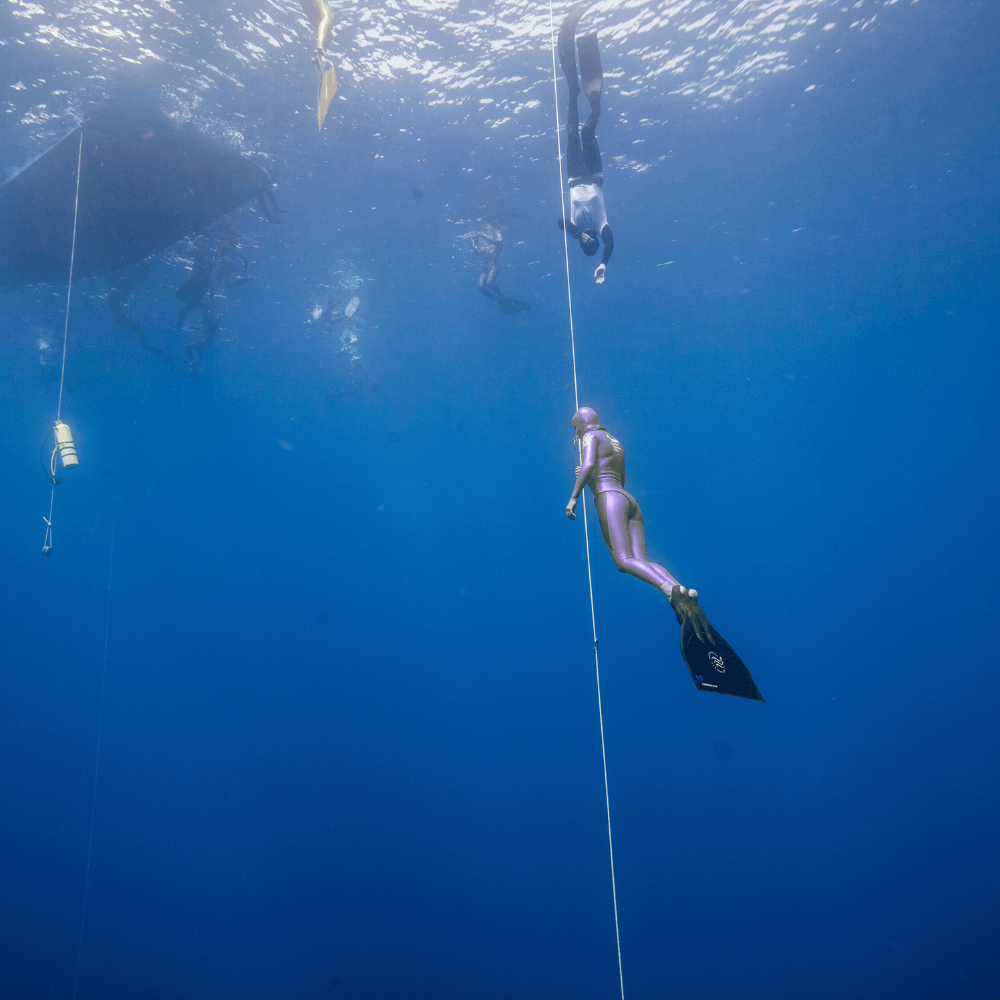
 The secret in freediving isn’t just in training, it’s what we nourish our bodies with. © @junglefreediver.
Evidence in Freediving
Research directly on freedivers is limited but promising. One study found that beetroot juice increased spleen contraction and circulating haemoglobin during static apnea, suggesting a larger release of oxygen-rich red blood cells during dives.8
Studies in swimmers and endurance athletes indicate nitrate supplementation reduces muscular oxygen demand and improves muscle oxygenation and power output.2,3,5,9 For freedivers, these effects can translate into steadier heart rates, smoother movements, and delayed onset of hypoxia.
Therapeutic Dose
Most studies demonstrating benefits use 5–8 mmol nitrate daily. This equates to 6–14 g beetroot powder (depending on nitrate content/ quality) or approximately 500 ml of beetroot juice.5,6 Peak plasma nitrate levels occur 2–3 hours after ingestion,7 so this timing is optimal for pre-dive supplementation. Both acute (single-dose) and short-term loading (3–6 days) have demonstrated effectiveness.6
Practical guidelines for freedivers:
- Dose: 6–14 g beetroot powder or 500 ml juice
- Timing: 2–3 hours before diving
- Frequency: Single pre-dive dose or daily for 3–6 days before key dives
Caution and Possible Downsides
- Gastrointestinal upset: Some experience cramps or loose stools, especially with juice. Start with small amounts.
- Beeturia: Red urine or stool is harmless.
- Oral bacteria: Avoid brushing teeth or using antibacterial mouthwash 2 hours before and after consumption.10
- Blood pressure: Beetroot can lower BP; caution for those with low blood pressure or on antihypertensives.
- Individual response: Effects vary due to genetics, diet, and microbiome.
 Fuel calm and focus from the inside out with beetroot powder and nitrates.
How Beetroot Helps You Dive Smarter, Not Harder
Beetroot supplementation does not increase oxygen supplies but improves the efficiency of using available oxygen. By supporting circulation, reducing oxygen consumption, and enhancing muscle and pulmonary efficiency, beetroot powder complements the Mammalian Dive Reflex. While research in freedivers is emerging, evidence from endurance athletes provides a strong physiological rationale. Supplementation should enhance, not replace, solid freediving training, nutrition, and recovery practices.
About the Author
Tara Kate Rawson is an Accredited Sports Dietitian and freediving athlete who combines evidence-based nutrition science with real-world freediving experience to help athletes optimize underwater performance.
Disclaimer: This article discusses general nutrition tips for freediving and is not a replacement for personalised medical or dietary advice. Every individual’s health and physical condition is unique—please consult a medical professional before implementing any nutritional changes related to freediving performance or safety.
References:
- Lundberg JO, Weitzberg E, Gladwin MT. The nitrate–nitrite–nitric oxide pathway in physiology and therapeutics. Nat Rev Drug Discov. 2008;7(2):156–167.
- Wylie LJ, Kelly J, Bailey SJ, et al. Beetroot juice and exercise: pharmacodynamic and dose-response relationships. J Appl Physiol. 2013;115(3):325–336.
- Bailey SJ, Winyard P, Vanhatalo A, et al. Dietary nitrate supplementation reduces the O₂ cost of low-intensity exercise and enhances tolerance to high-intensity exercise in humans. J Appl Physiol. 2009;107(4):1144–1155.
- Ferguson SK, Hirai DM, Copp SW, et al. Effect of dietary nitrate on human skeletal muscle function and energetics. J Physiol. 2013;591(22):5473–5485.
- Jones AM. Dietary nitrate supplementation and exercise performance. Sports Med. 2014;44(Suppl 1):S35–S45.
- Kapil V, Milsom AB, Okorie M, et al. Inorganic nitrate supplementation lowers blood pressure in humans. Hypertension. 2015;65(2):320–327.
- Archer SL, Huang JM, Hampl V, et al. Nitric oxide and pulmonary gas exchange. Am J Physiol Lung Cell Mol Physiol. 1998;275(1):L118–L133.
- Barak OF, Rotstein A, Sagiv M, et al. Beetroot juice enhances spleen contraction and haemoglobin mobilization in breath-hold divers. Front Physiol. 2021;12:662380.
- Hoon MW, Jones AM, Johnson NA, et al. Dietary nitrate supplementation improves repeated high-intensity swim performance. Int J Sport Nutr Exerc Metab. 2014;24(5):473–480.
- Kapil V, Haydar SM, Pearl V, et al. Physiological role for nitrate-reducing oral bacteria in blood pressure control. Nitric Oxide. 2013;30:178–184.
Interested in strength training for freediving.
Leave a comment