


nOxygen Productions: Behind the Scenes & Beneath the Surface of the World Apnea 2026 Pool Championships

From mobile phones in jam jars to underwater drones and data streaming—a behind-the-scenes look at nOxygen’s homegrown production of the 2026 AIDA Pool World Championships.
By Kristina Zvaritch
Editor Zowie Palliaer
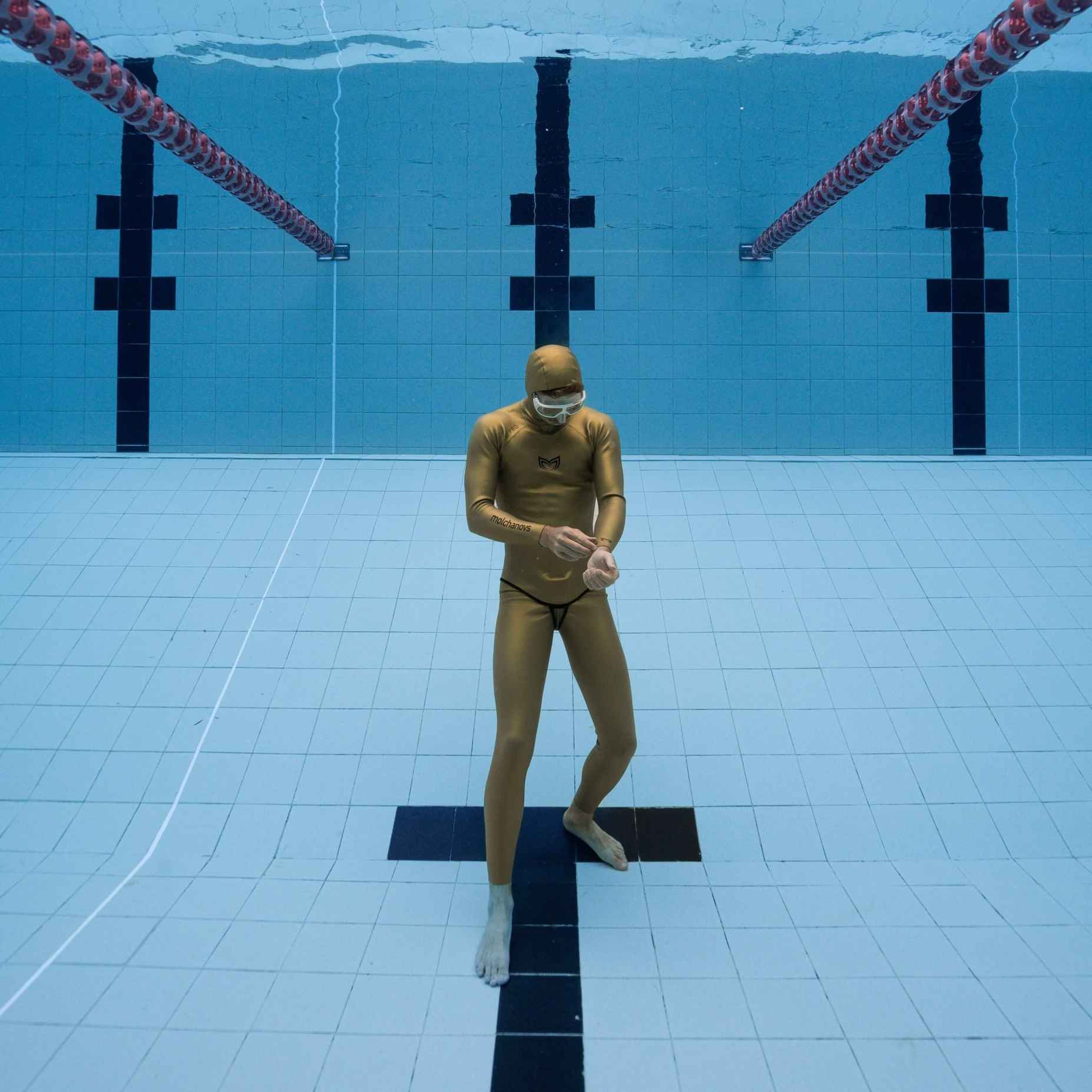
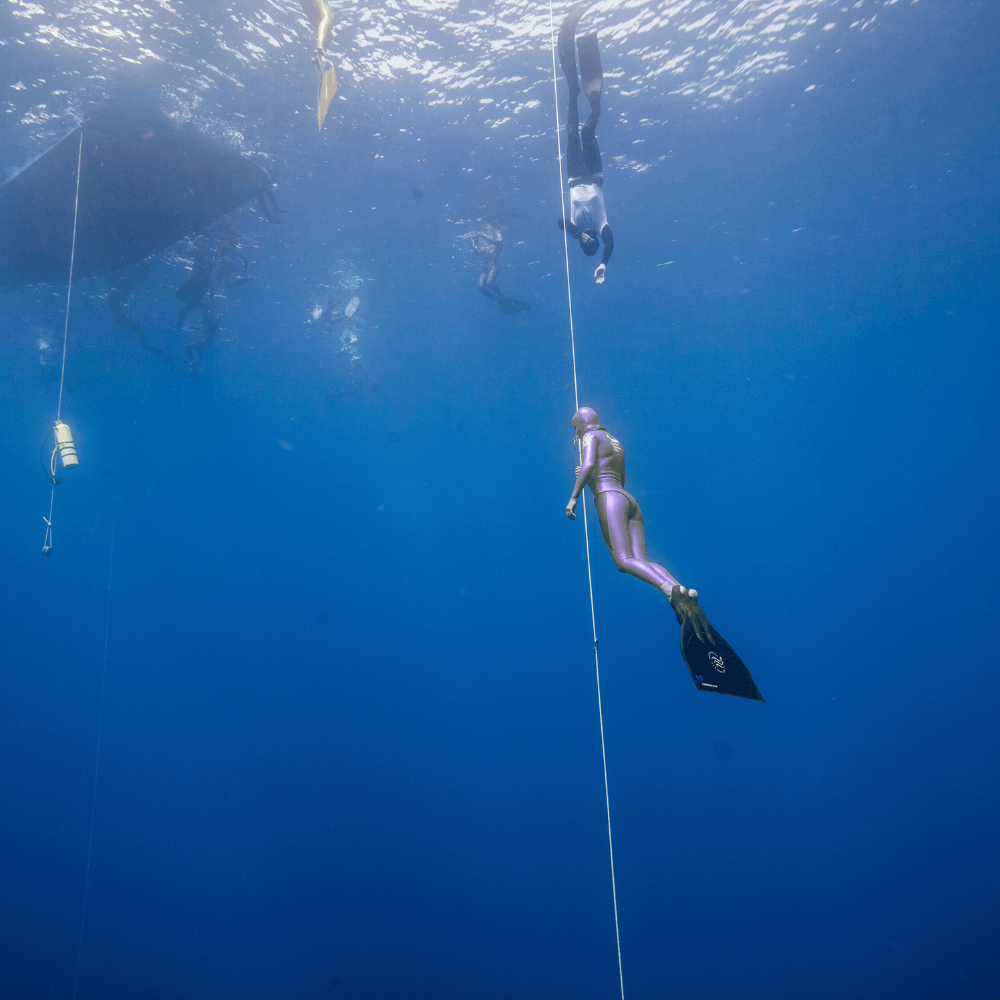
The magic behind the 2026 World Apnea Pool Championships livestream. Photo © @László Bacskó.
Let's be honest: watching freediving competitions, even live at the venue, isn't usually considered the most exciting event for non-freedivers to watch. But with a little technical magic, everything changes.
For the 2026 World Apnea Pool Championships, AIDA International chose Hungary’s nOxygen Apnea Club to organize and produce the event in Budapest, Hungary—and we're so glad they did.
Between the engaging commentary, the endless camera angles both above and below water that flowed seamlessly into replays, and a live data table tracking each diver's PB, AP, distance covered, surface protocol countdown, and card, every dive became a story the audience could actually invest in.
It's easy to assume a big production company was behind that level of polish—but it wasn't. Every camera angle, graphic, and data point came from nOxygen and its media team, which built the entire broadcast in-house. And honestly, the behind-the-scenes story they shared with us is just as exciting as the competition itself.
nOxygen's Humble Beginnings
Check out the nOxyApp’s Live Data Stream in action at the World Apnea Pool Championships 2026.
It's a long way from where they started. Back in 2019, eight friends founded the nOxygen Apnea Club, training together at the pool on a hobby level. Club president László Bacskó started asking a bigger question: how could Hungarian freediving reach the world elite, and fast? His answer was the nOxyCup, launched in fall 2021. "The nOxyCup is not just a simple competition," he says. "It has a role in the development of Hungarian freediving, similar to building a stadium in football."
Fewer than 30 athletes showed up to that first edition, but László flew in four of the world's best and covered their travel himself. The gamble paid off immediately: Magdalena Solich-Talanda set a world record at that very first nOxyCup and has been a staple at the competition ever since. Today, nOxygen boasts more than 120 active members, and its roster includes Molchanovs athlete and World Record holder Zsófia Törőcsik, one of the sport's top competitors.
From Jam Jars to a Professional Broadcast
If a tree falls in a forest and no one is around to hear it, does it make a sound?
In other words, results don't mean much if nobody's watching. So when the first nOxyCup livestream happened in 2022, founding member Miklós Borsos showed up armed with a laptop, some mobile phones, and a handful of jam jars. With a healthy dose of creativity, nOxygen streamed athlete performances live to the nOxygen YouTube channel, mixing above-water camera footage with mobile phones tucked inside jam jars for an underwater view.
Then, in 2023, the team tried bringing in a professional streaming provider, but quickly ran into a wall. After all, freediving doesn't behave like other sports—how do you tell the story of pool freediving? "If it's football, by following the player with the ball; if it's swimming, by showing the athlete swimming in the lead," László explains. "However, freediving has no such focal point. The swimmer in the lead doesn't win."
So, nOxygen pulled production back in-house, bringing in outside help only for equipment and technical staff, while handling the composition, directing, editing, and data themselves. Even the graphics were created from scratch by in-house designer Fruzsi Nemes.
 A peek into the production that went into the World Apnea Pool Championships. Photo © @László Bacskó.
But what made the real difference was the cinematography. László decided to treat each dive like its own mini Marvel movie, including an intro, a struggle, a climax, catharsis, and resolution. The cameras set the mood, but the data crawling across the screen was what actually told the story, turning six swimmers in a heat into something an audience can follow and care about.
It’s easy to see why AIDA International, which typically hires an outside production company separately for World Championship events, chose nOxygen to produce the 2026 World Apnea Pool Championships.
Technology Behind the Broadcast
The underwater camera setup is its own small miracle. Diveye, the commercial option, was way out of budget for the club, so László spent a year building an alternative himself, working through prototype after prototype in a Budapest garage. What he ended up with, the same rig used at the World Championships, cost under 1,000 euros to build.
Meanwhile, Miki Borsos started building the revolutionary nOxyApp during that very first nOxyCup, once it became obvious Excel spreadsheets weren't going to cut it. Krisztián Dobó joined the development at the end of 2025 and helped shape the app into its current form. Now, the Live Data Stream feature lets viewers track an athlete's pace against their AP, PB, NR, CR, or WR in real time, then watch the surface protocol countdown and see the card the second a heat wraps up.
The nOxyApp is a game-changer for competition organizers; it's truly a freediving ecosystem, running both the streaming data and official AIDA result entries at the same time. But for László, the app isn't just a tool for organizers; it's a tool for the sport's survival. His logic is simple: entertainment draws attention, attention draws sponsors, and sponsors are what allow athletes to actually make a living from the sport.
"The sport is beautiful, but the beauty alone isn't enough," he says. "It's the data streaming that gives people a reason to watch." Without that layer of live information turning each dive into something understandable and gripping, freediving stays a niche sport admired by insiders rather than something that can pull in the kind of audience and funding it needs to grow.
 Eszter Kalóczkai and Catherine Crossland commentating at the World Apnea Pool Championships. Photo © @László Bacskó.
He also credits Eszter Kalóczkai, who has commentated every AIDA World Championships since 2024 alongside Catherine Crossland. Eszter's origin story is as much a part of the nOxyCup as the technology behind it: they work in IT, have a humanities degree, and competed as an athlete at the 2022 nOxyCup. After finishing their dive, Eszter was handed a mic on a whim, and they answered with a laugh and jumped right into commentating. László later told Eszter that they'd be commentating at the World Championships someday, and two years later, that came true.
Looking to the Future
AIDA President Saša Jeremić put it best: getting six athletes diving at their own pace, surfacing anywhere in the pool, to read as watchable and understandable on a reasonable budget was always a challenge.
“Thanks to the nOxygen team, it seems we have a solution now to keep hosting a rising number of athletes and bring their performances to the screens of their family, friends, and supporters in all corners of the world.”
That solution will carry forward to Malaysia, where the nOxygen team will bring its broadcast experience and technology to the live stream of the World Apnea 2027 Pool Championships. The nOxygen Apnea Club isn't slowing down either, with the nOxyCup 2026 on athletes’ calendars for November 14–15 in Budapest.
Not bad for a club that started with jam jars and borrowed phones!
Follow @noxygenapneaclub on Instagram to stay up-to-date on club and competition info. Subscribe to the Magazine for the latest articles, tips, stories and competition reporting
Leave a comment